
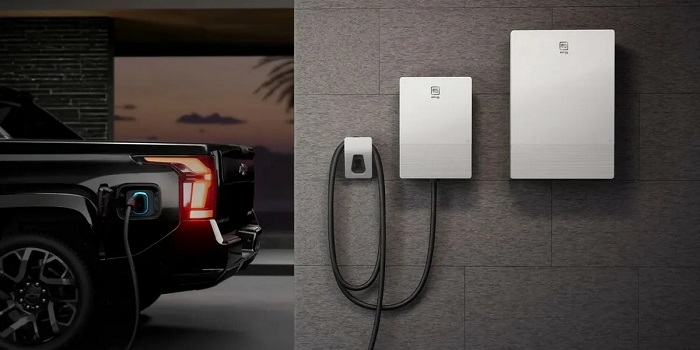
Bidirectional charging has moved from trade-show demo to real planning question. Homeowners hear that an EV can power a house. Businesses hear that parked vehicles may help manage demand. The idea is appealing, but the purchase still has to survive ordinary questions about cost, compatibility, and daily use.
A bidirectional EV charger sends power both ways. It can charge the vehicle, and when the vehicle and system allow it, it can discharge the EV battery to a home, building, or grid program. In 2026, the technology is worth considering, but it is not yet a universal upgrade for every EV owner.
The Value Depends on What It Replaces
A bidirectional charger is more compelling if it reduces the need for a separate generator, adds backup capacity, or participates in a utility program. The U.S. Department of Energy says bidirectional charging can provide backup power and demand-response capabilities. Those benefits are real, but they depend on local rules and compatible equipment.
The cost question should include more than the charger. A V2H setup may require transfer equipment, electrical upgrades, software controls, permits, and interconnection approval. A lower hardware price can still turn into an expensive project if the electrical panel or utility process is not ready.
That is why it helps to compare the bidirectional charger against the actual alternative. If the alternative is a standby generator plus fuel storage, the value may look different than if the alternative is simply a standard Level 2 charger on an existing circuit.
Compatibility Is the Gatekeeper
Not every EV can send power back out. Not every charger can manage two-way flow. Not every utility allows export. A bidirectional charger only becomes useful when the car, charger, inverter or gateway, and local rules all match.
ESYsunhome lists EV22 V2E as a 22 kW DC-coupled bidirectional charger that is V2H and V2G ready. That kind of product belongs in a broader energy system with storage and controls. For buyers comparing bidirectional EV charger products, the checklist should include connector compatibility, discharge mode, backup transfer method, communications, and whether the charger can coordinate with solar and stationary storage.
Where the Payback Story Gets Stronger
The financial case is usually strongest when the EV is parked at predictable times, electricity prices vary by hour, and backup power has real value. The AFDC notes that some utilities offer time-of-use rates for charging infrastructure owners. If a system can charge when electricity is cheap and discharge during high-cost periods, it may reduce bills. If a utility offers demand-response or grid-service payments, the case can improve further.
The backup case is separate from pure payback. A household in an outage-prone area may value quiet backup power even if the spreadsheet takes longer to break even. A business may value keeping selected loads operating, maintaining customer service, or avoiding lost productivity.
When It Is Not Worth It Yet
A bidirectional charger is less likely to make sense if the EV is not compatible, the car is rarely home, utility rules do not support export, or a stationary battery already covers backup needs. It may also be premature for buyers who plan to switch vehicles soon and cannot confirm future compatibility.
In 2026, the best answer is conditional. A bidirectional charger is worth a serious look when V2H or V2G solves a clear problem. It is not worth buying for the label alone. The useful question is not whether two-way charging is exciting. It is whether the vehicle will be available, the system will be permitted, and the energy has somewhere valuable to go.